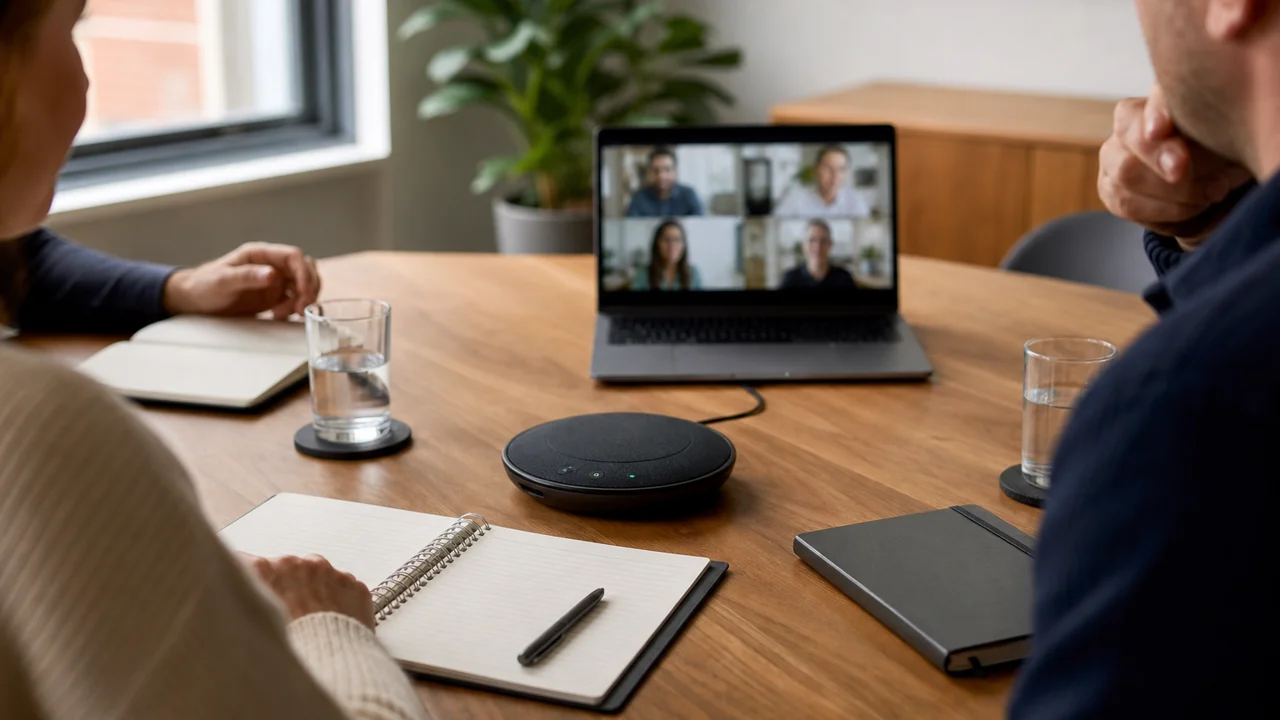
A room placement decision should begin with the room, not the product tile. Small meeting rooms create their own problems: people sit at uneven distances, laptops fight for audio control, hard walls bounce voices, and one quiet participant can disappear from the call. A good speakerphone does not make the room fancy; it makes ordinary voices easier for remote people to follow.
This guide uses plain editorial selection criteria rather than fake lab claims. The aim is to help a buyer compare visible features, likely room behavior, controls, and setup habits before choosing a device for daily meetings.
Start with the people around the table
For conference speakerphones for small meeting rooms, this matters because small audio problems become meeting problems quickly. Look at where the device will sit, who will control mute, how many people need to be heard, and whether the room has glass, bare walls, or a loud air conditioner. The best choice is usually the one that reduces friction before the call starts.
Imagine a four-person planning call where two people face the laptop and two sit off to the side. If the microphone pattern only favors the laptop end of the table, remote attendees hear an uneven conversation. If controls are confusing, people talk over each other while searching for mute. These small details are more useful than a dramatic marketing phrase.
- Check room size against realistic pickup range.
- Prefer clear mute feedback and simple volume buttons.
- Think about cable routing, storage, and who sets up the call.
Listen for voice clarity before loudness
For conference speakerphones for small meeting rooms, this matters because small audio problems become meeting problems quickly. Look at where the device will sit, who will control mute, how many people need to be heard, and whether the room has glass, bare walls, or a loud air conditioner. The best choice is usually the one that reduces friction before the call starts.
Imagine a four-person planning call where two people face the laptop and two sit off to the side. If the microphone pattern only favors the laptop end of the table, remote attendees hear an uneven conversation. If controls are confusing, people talk over each other while searching for mute. These small details are more useful than a dramatic marketing phrase.
- Check room size against realistic pickup range.
- Prefer clear mute feedback and simple volume buttons.
- Think about cable routing, storage, and who sets up the call.
Check controls before the first client call
For conference speakerphones for small meeting rooms, this matters because small audio problems become meeting problems quickly. Look at where the device will sit, who will control mute, how many people need to be heard, and whether the room has glass, bare walls, or a loud air conditioner. The best choice is usually the one that reduces friction before the call starts.
Imagine a four-person planning call where two people face the laptop and two sit off to the side. If the microphone pattern only favors the laptop end of the table, remote attendees hear an uneven conversation. If controls are confusing, people talk over each other while searching for mute. These small details are more useful than a dramatic marketing phrase.
- Check room size against realistic pickup range.
- Prefer clear mute feedback and simple volume buttons.
- Think about cable routing, storage, and who sets up the call.
Plan cable and charging habits
For conference speakerphones for small meeting rooms, this matters because small audio problems become meeting problems quickly. Look at where the device will sit, who will control mute, how many people need to be heard, and whether the room has glass, bare walls, or a loud air conditioner. The best choice is usually the one that reduces friction before the call starts.
Imagine a four-person planning call where two people face the laptop and two sit off to the side. If the microphone pattern only favors the laptop end of the table, remote attendees hear an uneven conversation. If controls are confusing, people talk over each other while searching for mute. These small details are more useful than a dramatic marketing phrase.
- Check room size against realistic pickup range.
- Prefer clear mute feedback and simple volume buttons.
- Think about cable routing, storage, and who sets up the call.
Match the device to the real room
For conference speakerphones for small meeting rooms, this matters because small audio problems become meeting problems quickly. Look at where the device will sit, who will control mute, how many people need to be heard, and whether the room has glass, bare walls, or a loud air conditioner. The best choice is usually the one that reduces friction before the call starts.
Imagine a four-person planning call where two people face the laptop and two sit off to the side. If the microphone pattern only favors the laptop end of the table, remote attendees hear an uneven conversation. If controls are confusing, people talk over each other while searching for mute. These small details are more useful than a dramatic marketing phrase.
- Check room size against realistic pickup range.
- Prefer clear mute feedback and simple volume buttons.
- Think about cable routing, storage, and who sets up the call.
Use a practical shortlist test
For conference speakerphones for small meeting rooms, this matters because small audio problems become meeting problems quickly. Look at where the device will sit, who will control mute, how many people need to be heard, and whether the room has glass, bare walls, or a loud air conditioner. The best choice is usually the one that reduces friction before the call starts.
Imagine a four-person planning call where two people face the laptop and two sit off to the side. If the microphone pattern only favors the laptop end of the table, remote attendees hear an uneven conversation. If controls are confusing, people talk over each other while searching for mute. These small details are more useful than a dramatic marketing phrase.
- Check room size against realistic pickup range.
- Prefer clear mute feedback and simple volume buttons.
- Think about cable routing, storage, and who sets up the call.
FAQ
Can one speakerphone cover every small room?
Not always. Table length, seating pattern, wall surfaces, and background noise all change how well one device works.
Is a speakerphone better than laptop audio?
Usually for group calls, because the microphone and speaker are positioned for the table instead of one laptop user.
Related guides
Room placement Mic pickup Connection setup Echo control Hybrid etiquette Buying mistakes Previous cloud article: webcam meeting guide